Domains · July 31, 2026 · 5 min read
Choosing Your Domain's Ending: What to Consider
The last part of your web address, like .com or .net, is called a TLD; picking the right one helps your business look professional and be found online.
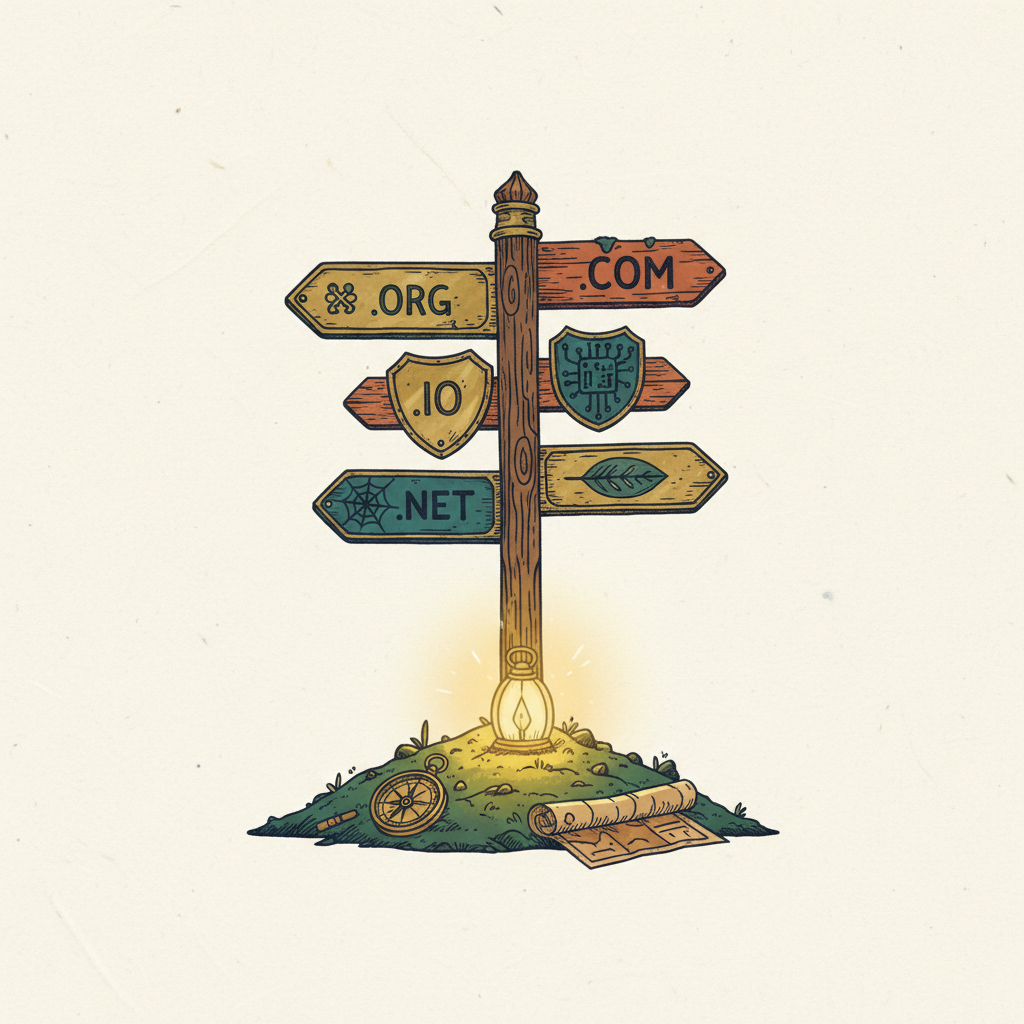
The last part of your web address, like .com or .net, matters more than you might think. This ending, called a Top-Level Domain (TLD), affects how customers see your business online and how easily they can find you.
Understanding Top-Level Domains (TLDs)
A TLD is the final segment of any domain name. For example, in "yourbusiness.com," ".com" is the TLD. These endings are categorized in different ways, but the most common distinction is between generic TLDs (gTLDs) and country code TLDs (ccTLDs).
Generic TLDs are the most widely recognized. Think ".com," ".org," ".net," and ".biz." There are also many newer gTLDs like ".shop," ".cafe," or ".app." These newer options can sometimes be very specific to an industry or purpose.
Country code TLDs are specific to a country or region, such as ".ca" for Canada or ".uk" for the United Kingdom. If your business primarily serves customers in a specific country, a ccTLD can clearly signal your local presence.
Why Your TLD Choice Matters
Your TLD isn't just a technical detail; it's part of your brand identity and how customers perceive you.
Credibility and Trust: Some TLDs are more trusted and recognized than others. ".com" is the most common and often implies a well-established, global presence. Many people automatically type ".com" when searching for a business. If your business uses a less common TLD, customers might question its legitimacy if they are not familiar with it.
Memorability: A short, easy-to-remember TLD helps customers recall your website address. If your TLD is long or unusual, it might be harder for people to type correctly or remember later.
Brand Alignment: A TLD can reinforce your brand. For a tech startup, a ".io" or ".tech" might be fitting. For a local bakery, a country-specific TLD or even a newer gTLD like ".cafe" could work well. Choose an option that makes sense for your business and industry.
Availability: Many popular domain names with ".com" are already taken. This often leads businesses to look at other TLDs. While it's good to have options, make sure the alternative TLD still aligns with your brand and goals. Sometimes, a slightly different domain name with a strong TLD is better than your first choice with a less fitting TLD.
Common TLD Options and Their Uses
Let's look at some of the most common TLDs and when they are typically used:
- ".com" (commercial): This is the most popular and versatile TLD. It's suitable for almost any type of business, regardless of size or industry. If available, ".com" is usually the best choice for its broad recognition and trust.
- ".net" (network): Originally for networking organizations, it's now often used when the ".com" version of a name is unavailable. It's generally recognized but less common for general business websites than ".com."
- ".org" (organization): Primarily used by non-profit organizations, charities, and community groups. If you run a for-profit business, ".org" is usually not the right fit and could confuse customers.
- ".biz" (business): Clearly indicates a business, but it hasn't gained the same level of trust or recognition as ".com."
- Country Code TLDs (e.g., ".ca," ".uk," ".de"): Ideal if your business solely serves customers in a specific country. It immediately tells visitors your geographic focus. This can also help with local search engine results.
Newer TLDs like ".shop," ".online," ".app," ".tech," or ".store" offer more specific branding opportunities. For example, if you run an online store, ".store" might be a good fit, assuming your target audience recognizes it.
Choosing the Right TLD for Your Business
Here's a simple process to help you decide:
- Prioritize ".com": Always check for your desired domain name with a ".com" first. If it's available and fits your budget, it's usually the safest and most effective choice.
- Consider Your Audience: Are your customers local or global? If local, a country code TLD might be beneficial. If global, ".com" is generally preferred.
- Reflect Your Brand: Does a specific TLD genuinely enhance your brand identity? A ".cafe" for a coffee shop, for instance, makes sense.
- Check for Alternatives (Carefully): If ".com" isn't available, look at ".net" or relevant newer gTLDs. Avoid obscure TLDs that might look unprofessional or confuse your audience.
- Secure Related TLDs (Optional but Recommended): To protect your brand, you might want to register your domain name with several common TLDs (e.g., yourbusiness.com, yourbusiness.net) and redirect them all to your main website. This prevents competitors or others from using a similar name and TLD to yours.
Takeaways
- The TLD is the ending of your web address, like .com or .net.
- Your TLD impacts how credible and memorable your business appears online.
- ".com" is generally the most recognized and trusted choice.
- Country code TLDs are good for geographically focused businesses.
- Newer, specific TLDs can reinforce your brand if they fit well.
Picking the right TLD is a foundational step for your online presence. Once you've chosen a domain name and its ending, you'll need to register it with a domain registrar. This is also where you can often set up professional email for your business using your new domain.
Get more like this
One short, useful note in your inbox each week, written for people running real businesses.
Up next
Previous · Domains
How Many Characters Can Your Domain Name Be?
Understand the length limits for domain names and how they impact your business's online identity.
Next · Trust
Should You Display Business Licenses Online?
Learn when and why to show your business licenses on your website to build customer trust and demonstrate credibility.