Websites · November 16, 2026 · 5 min read
How much does a small business website really cost?
Most small businesses spend between $0 and a few thousand dollars. Here's what each price tier gets you, and where the surprise costs hide.
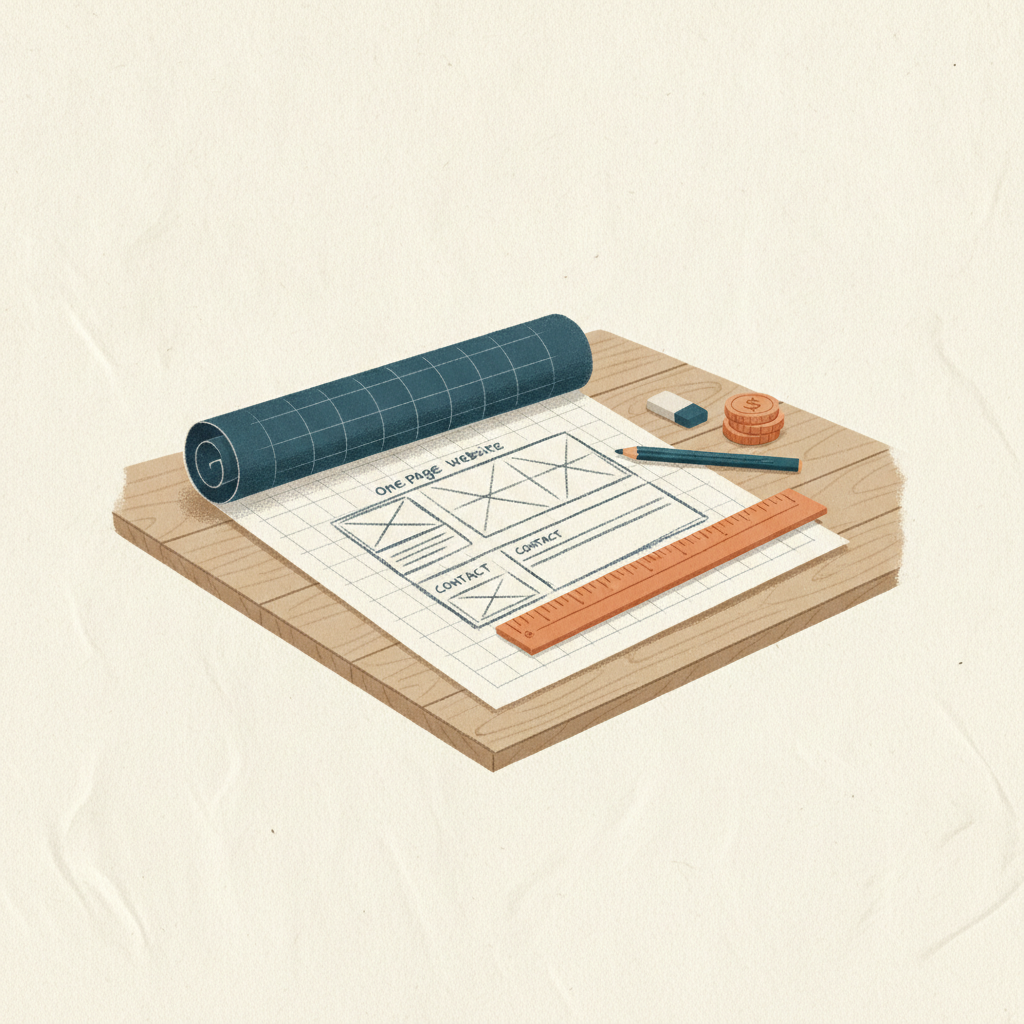
Most small business owners overpay for a website they don't need yet, or underpay and end up rebuilding it in a year. The right number depends on what the site has to do on day one.
The real price tiers
Here's how the spending usually breaks down.
$0 to $100 a year: a basic DIY site. You use a website builder, pick a template, and write the pages yourself. Free plans exist, but they usually put the builder's branding on your site and give you an ugly web address. Once you pay for a plan that lets you connect your own domain and remove the ads, you're typically in the range of $15 to $40 a month for most small sites. Annual billing often brings that down.
$500 to $3,000: a freelancer or small agency using a template. Someone sets up the site, customizes the design, and writes or polishes the copy. You get a cleaner result and you don't burn a weekend learning the tool. This is a good fit for a contractor, a salon, a consultant, or a local shop that needs to look credible and get found.
$3,000 to $10,000 and up: a custom build. Custom design, custom features, booking systems, member areas, or a large store catalog. Most small businesses don't need this at the start. If someone quotes you here for a five-page brochure site, ask what you're getting that a template couldn't do.
What you pay for every year, no matter the tier
These are the costs people forget when they compare quotes.
- Domain name: Usually $10 to $20 a year for a common ending like .com. Renewal prices can be higher than the first-year deal, so check both.
- Hosting: If you use a website builder, hosting is bundled into the monthly fee. If you build on your own, expect to pay separately.
- Professional email: An address like you@yourbusiness.com costs a few dollars per user per month. It's not part of most website plans, and it matters more than the design for looking legitimate.
- SSL certificate: The little padlock that makes your site secure. Many plans include it free. If a quote lists it as a big extra, push back.
Add those up and a very lean setup lands somewhere around $200 to $500 a year before you pay anyone for design.
Where the surprise costs hide
The sticker price rarely tells the whole story. Watch for these.
Add-ons that should be standard. Some builders charge extra for removing their branding, adding a contact form, or accepting payments. Read the plan comparison chart line by line.
Transaction fees. If you sell online, you'll pay payment processing fees (a percentage plus a small flat amount per sale). Some platforms add their own fee on top. On a store doing real volume, this is your biggest ongoing cost.
Ongoing updates from a freelancer. Ask who changes the hours, swaps a photo, or adds a service after launch. If the answer is "me, at $75 an hour," you want to know that now. A site you can edit yourself saves real money.
Content and photos. A site with weak writing and stock photos of strangers in handshakes won't convert. Budget a few hundred dollars for decent photos of your actual work, your team, or your storefront. It's often the best money you'll spend.
Ownership. Make sure the domain is registered in your name, not the designer's. If you part ways, you shouldn't have to negotiate to get your own web address back.
How to decide what to spend
Start with what the site has to do. If people mainly need your phone number, your hours, a list of services, and a few photos, a DIY site at the low tier is enough. If you need online booking or a store, price those features first, because they drive the cost.
Then think about your time. If you bill $100 an hour and a DIY site eats 30 hours, hiring a freelancer for $1,500 isn't the expensive choice.
Finally, plan to start small. A clean five-page site that goes live this month beats a perfect one that launches next spring. You can upgrade as the business grows.
Takeaways
- A simple small business site can run under $500 a year. Custom builds are rarely needed at the start.
- Budget separately for your domain, professional email, and photos. They're often left out of quotes.
- Check renewal prices, add-on fees, and payment processing fees before you commit.
- Make sure you own your domain and can edit the site yourself.
- Launch a small, clean site first and improve it over time.
Your first move is cheap and quick: register a domain that matches your business name, and set up a professional email address on it. Both make you look established before the website is even finished.
Up next
Previous · Trust
How to get your first online reviews (without feeling awkward)
Your first five reviews are the hardest. Here's who to ask, when to ask, and exactly what to say to get them.
Next · Email
info@ or your name: which business email should you use?
Both have a place. Here's how to decide which address goes on your website, your invoices, and your cold outreach.